
Stealth Horror Games




Stealth Horror Games take away your weapons and give you something better: patience. You sneak past a grandmother who hears every creak, slip through a neighbor's house while he patrols the halls or hide in a closet while something walks by. This shelf is for players who love the silence before a close call.
Hiding as the Main Skill
In most action games, the answer to danger is to fight. Stealth Horror Games flip that. You win by not being seen, not being heard and not being in the wrong room at the wrong moment. Every closet, bed and dark corner becomes a tool, and learning the map matters more than learning any combo.
This creates a very specific kind of tension. When the hunter is close, you can do nothing but wait and listen. Those seconds feel much longer than any boss fight, and surviving them is one of the best feelings the genre offers.
It also makes the shelf welcoming to players who are not fast with their hands. Calm thinking beats quick reflexes here almost every time.
Hunters You Will Learn to Avoid
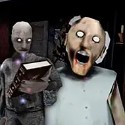
- Granny, who hears dropped items and creaking floors, in Granny and its sequels.
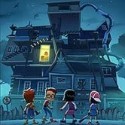
- The neighbor next door, who guards a basement he does not want you to see, in Hello Neighbor: Welcome to Raven Brooks.
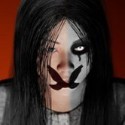
- A haunted doll who steals what you carry and then hunts you, in Pacify.
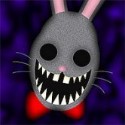
- Plush toys patrolling an orphanage at night, in the Mr. Hopp's Playhouse games.
- You as the threat, in The Happyhills Homicide, where the roles are reversed.
Each hunter has a pattern. Stealth Horror Games are really about reading that pattern faster than it reads you.
Sound Is Your Radar
Because you often cannot see the hunter, your ears do the work. Footsteps above you, a door opening down the hall, a change in the music: these are the clues that tell you when to move and when to stay put. Headphones make a real difference on this shelf.
The same goes for your own noise. Running is loud, dropping things is loud and some floors are louder than others. Many Stealth Horror Games track how much noise you make, either openly with a meter or quietly in the background.
A good habit is to stop for two seconds every time you hear something new. Most runs are saved by that tiny pause.
The Hide Scene in Suzy Says!
Suzy Says! has a short but memorable stealth section. When Suzy orders you to hide, a creature walks through the house, and being seen ends the run. There is no meter and no weapon, only walls, doorways and timing.
The best preparation happens earlier. Each trip Suzy sends you on, to the painting, the bathroom or the fridge, is a chance to learn the layout. Our house map guide shows every room and the safest corners to use when the search begins.
It is a compact lesson in everything Stealth Horror Games ask of you: learn the space early, move only when it is quiet and never stand in an open doorway while something is searching. Players who follow those three rules usually reach the candle hunt on their first try.
Stealth Horror Games and Replaying Smart
Many Stealth Horror Games give you several attempts, days or lives. Use the first one to explore rather than to win. Find the hiding spots, note where items are and watch how the hunter moves after it loses you.
On the next attempt, plan a route with two exits at every step. Dead ends are where most captures happen, and a room with a second door is worth more than any item.
Speedrunners take this to the extreme, memorizing patrols so precisely that they barely hide at all. Watching one of their runs after you finish is a great way to see the map in a new light.
Single-Player Tension Versus Co-op Chaos
Most Stealth Horror Games are built for one player, and that is where the fear is purest. Alone in the house, every sound is yours to interpret, and there is nobody to tell you the hunter just turned the corner. Solo runs are slower and quieter, and the relief of a successful escape is entirely yours.
A few games on the shelf support co-op, and they change the mood completely. Friends can split up to search rooms, act as bait or call out where the hunter is. The result is louder and often funnier, with panicked voice chat and doors slammed at the worst moment, but it can be just as tense when the last survivor is hiding alone.
Both styles teach the same lesson. In Stealth Horror Games, information is the real weapon, whether it comes from your own ears or from a teammate shouting across the map. Pick solo for dread, co-op for laughter, and switch between them to keep each game fresh.
Picking Your Next Hideout
New to Stealth Horror Games? Start with a single house and one hunter, then move to titles with several enemies or co-op. Players who like a twist should try the one where you are the one doing the stalking.
Every game here has its own page on SuzySaysGames with the hunter, the map and the goal described, so you can choose how much tension you want before you turn off the lights.